Voita Electronic Voita Electronic

China Top 10 Load Bank Manufacturers for Global Buyers?

Time:2026-10-17 Author:Madeline
0%

China’s load bank industry has become an important sourcing option for data centers, power plants, telecom networks, and generator service companies. MarketsandMarkets reports that the global load bank market is expanding steadily, supported by backup-power investment and stricter testing expectations. Grand View Research also identifies data-center infrastructure as a major demand driver. The figures differ between reports. That uncertainty deserves attention.

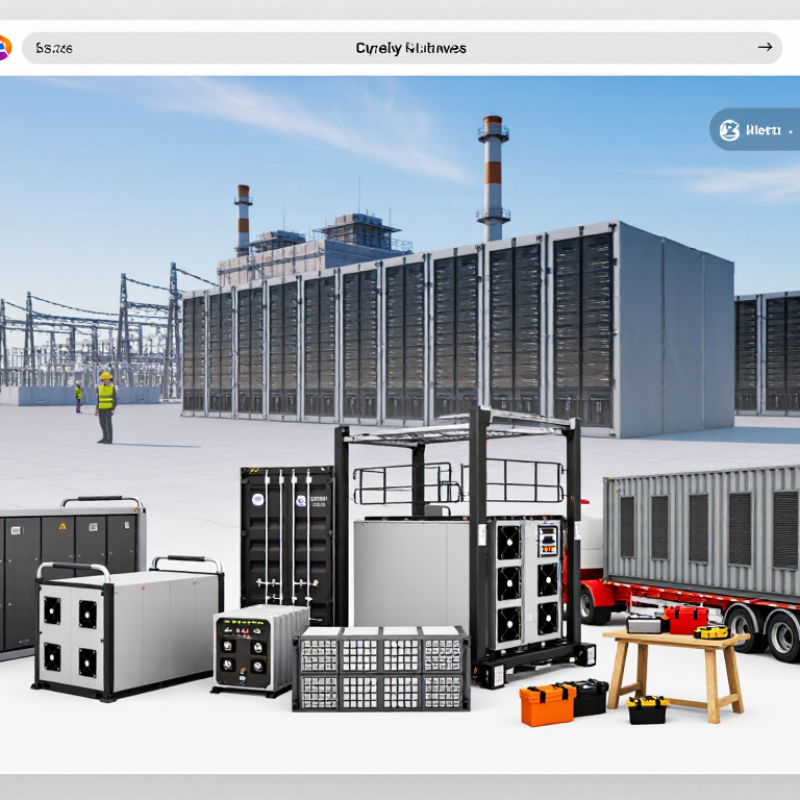
This article introduces ten leading Chinese Load Bank manufacturers for global buyers. The selection considers manufacturing experience, resistive and reactive load capacity, cooling design, factory testing, certifications, export records, and after-sales support. Products may include portable units with steel handles, trailer-mounted systems, and containerized banks designed for high-capacity generator testing. Compliance with standards such as ISO 8528-5, IEC requirements, and relevant IEEE practices should be verified for each project.

Electrical-safety specialist Jim White has emphasized, “A test is only as good as the conditions under which it is performed.” This principle matters when comparing suppliers. A polished brochure cannot replace a witnessed factory test, calibrated meters, thermal protection, and clear maintenance instructions. Buyers should also examine delivery times, spare-part availability, remote support, and local service capability. A low purchase price may become expensive when a fan motor fails overseas. No ranking is permanent. Manufacturers change, specifications vary, and regional certification needs can alter the best choice. This guide therefore aims to support careful comparison, not replace engineering review or site-specific validation.

China Top 10 Load Bank Manufacturers for Global Buyers?

What Is a Load Bank and Why Does Manufacturer Selection Matter?

A load bank is a controlled electrical device that applies a measurable load to a generator, UPS, battery system, or power supply. It converts electrical energy into heat through resistance, or manages power through reactive components. This process helps technicians verify output, voltage stability, frequency control, and cooling performance under realistic conditions. Without testing, a standby generator may appear ready while failing during a sudden building load.

Manufacturer selection matters because load banks must perform safely and consistently. Experienced manufacturers provide clear capacity ratings, accurate meters, thermal protection, emergency shutdowns, and calibration records. They should also explain whether a resistive, reactive, or combined unit suits the application. A well-designed unit may include weather-resistant housing, quiet fans, lifting points, and remote monitoring. These details matter on a crowded construction site or inside a narrow data center room.

Reliable suppliers do more than ship equipment. They review site voltage, connection methods, duty cycles, ambient temperature, and service access before production. Factory testing and practical manuals reduce mistakes during commissioning. Still, no selection process is flawless. Specifications can be misunderstood, and delivery promises may change. Buyers should question unclear claims, check technical references, and request evidence of inspection procedures. The cheapest option may become expensive when calibration, spare parts, or field support are missing. Look beyond the nameplate. Test the support behind it.

How to Evaluate China’s Load Bank Manufacturers for Global Procurement

Evaluating China-based load bank manufacturers requires more than comparing export prices. A serious buyer should verify engineering depth, factory controls, and documentation before requesting a quotation. Ask for the exact load profile: resistive, reactive, or combined; voltage, frequency, duty cycle, and cooling method. Details matter. A 1 MW unit for generator testing needs different protection from a compact data-center model. Request drawings, single-line diagrams, component lists, and recent calibration records. Check whether test instruments are traceable to recognized standards.

During supplier audits, inspect welding, cable routing, busbar insulation, and enclosure sealing. Ask to witness a factory acceptance test under realistic steps, not only a brief no-load demonstration. Confirm temperature rise, emergency-stop response, fan redundancy, overload protection, and noise readings. Review quality records for incoming parts and final inspection. Certificates alone are not enough. They can be outdated. The supplier should also explain how design changes are controlled after approval.

For global procurement, evaluate packing, export documentation, spare parts, remote diagnosis, and local service support. Put response times and warranty exclusions into the contract. Confirm that manuals, software, and warning labels match destination requirements. Compare total ownership cost, including freight, commissioning, connectors, and annual calibration. A cheap quotation may hide expensive site work. I would still challenge my own scoring. A polished factory tour can create false confidence. Request references from similar projects and verify performance independently.

China Top 10 Load Bank Manufacturers for Global Buyers? - How to Evaluate China’s Load Bank Manufacturers for Global Procurement
Anonymized procurement benchmark based on commonly specified load-bank configurations, international compliance requirements, export readiness, customization capability, and service factors. Values represent indicative capability bands and should be verified through technical submittals, factory audits, and witnessed testing.
Rank Anonymized Supplier Profile Typical Product Focus Indicative Power Range Common Voltage Range Load Types Cooling Configuration Relevant Standards to Request Customization Capability Export Documentation Typical Production Lead Time Evaluation Score
1 Profile A — High-capacity export specialist Containerized and trailer-mounted load banks 500 kW–6 MW per system 400–690 V AC; medium-voltage options by project Resistive, reactive, resistive-reactive Forced-air cooling IEC 60529, IEC 61439, CE-related documentation where applicable High: enclosure, cable sets, control logic, weather protection GA drawings, wiring diagrams, packing list, commercial invoice, test records 8–14 weeks 9.1/10
2 Profile B — Modular data-center testing supplier Modular resistive load banks for commissioning 100 kW–2 MW per unit 380–480 V AC; 50/60 Hz configurations Resistive; reactive modules available Forced-air cooling IEC 60204-1, IEC 60529, applicable local electrical codes Medium to high: step resolution, remote monitoring, connectors Technical data sheet, user manual, inspection report, export packing documents 6–12 weeks 8.9/10
3 Profile C — Generator and UPS test-equipment builder Portable generator and UPS load banks 50 kW–1.5 MW per unit 208–600 V AC; single- and three-phase options Resistive and resistive-reactive Forced-air cooling IEC 60529, IEC 61439, EMC and low-voltage requirements as applicable Medium: voltage, frequency, step size, lifting points Certificate of conformity, routine test report, manuals, shipping documents 5–10 weeks 8.7/10
4 Profile D — Heavy-duty industrial test supplier Industrial and utility-scale load banks 1–10 MW in parallel systems 400–1,000 V AC; higher-voltage engineering available Resistive, reactive, capacitive options by design Forced-air cooling; liquid-cooled designs by project IEC 60068 testing references, IEC 61439, IEC 60529 High: parallel operation, protection schemes, PLC integration FAT protocol, as-built drawings, relay settings, inspection and shipping records 10–18 weeks 8.6/10
5 Profile E — Rental and field-service oriented supplier Trailer, skid, and mobile load banks 100 kW–3 MW per unit 380–690 V AC; 50/60 Hz Resistive and resistive-reactive Forced-air cooling IEC 60529, electrical safety documentation, transport requirements Medium: mobility, lifting, cable storage, outdoor operation Operation manual, maintenance schedule, test certificate, packing list 6–11 weeks 8.4/10
6 Profile F — OEM and system-integration supplier Rack-mounted and integrated electronic load systems 5 kW–500 kW per cabinet or system 200–480 V AC; DC versions commonly engineered separately Electronic, resistive, programmable load Air-cooled; liquid cooling for selected applications IEC 61000 series, IEC 60204-1, IEC 60529 as applicable High: software, communications, automated test sequences Software documentation, calibration records, FAT report, user manuals 8–16 weeks 8.3/10
7 Profile G — Standardized commercial product supplier Catalogued AC load banks 25 kW–1 MW per unit 220–480 V AC; 50/60 Hz Primarily resistive Forced-air cooling IEC 60529, IEC 60204-1, applicable product conformity requirements Limited to medium: voltage, connectors, controls, enclosure color Datasheet, manual, routine test report, commercial export documents 4–9 weeks 8.1/10
8 Profile H — Marine and outdoor-environment supplier Weather-resistant and marine-duty load banks 100 kW–2 MW per unit 380–690 V AC; project-specific frequencies Resistive and resistive-reactive Forced-air cooling with corrosion-protection options IEC 60529, IEC 60068, marine or project specifications where required High: coating systems, lifting, vibration, salt-mist protection Material certificates, coating records, inspection reports, packing documents 9–16 weeks 8.0/10
9 Profile I — Cost-focused project manufacturer Basic resistive load banks for standard applications 30 kW–1 MW per unit 220–480 V AC; standard frequency configurations Resistive Forced-air cooling IEC 60529 and applicable electrical safety requirements Medium: step arrangement, controls, wheels, cable options Commercial invoice, packing list, manual, basic factory test report 5–10 weeks 7.7/10
10 Profile J — Small-batch custom engineering supplier Special-purpose and low-volume load-bank assemblies 10 kW–500 kW per system Single- or three-phase configurations up to 480 V AC Resistive; special configurations subject to design review Air-cooled IEC 60204-1, IEC 60529, project-specific electrical standards High for low-volume projects; capacity limits for large systems Drawings, bill of materials, inspection report, operating instructions 8–15 weeks 7.5/10

China’s Top 10 Load Bank Manufacturers by Product Strengths

China’s Top 10 Load Bank Manufacturers by Product Strengths

China’s leading load bank manufacturers compete through distinct product strengths, not identical catalogs. Several focus on resistive load banks for generator commissioning, UPS testing, and routine maintenance. Their units often provide stable step loading, clear meters, and practical protection systems.

Other manufacturers specialize in reactive or combined resistive-reactive load banks. These models help test alternators, transformers, and power distribution equipment under more realistic conditions. Portable designs suit construction sites, while trailer-mounted systems support large data centers and power stations. Some suppliers also offer compact DC load banks for batteries, telecom systems, and electric vehicle components.

Product quality depends on more than rated capacity. Buyers should examine cooling performance, control response, enclosure protection, cable design, and factory test records. Remote monitoring is increasingly useful, especially when technicians must review load steps from a control room. Custom voltage, frequency, and connector options can reduce installation problems. However, customization may extend delivery time and complicate spare-parts planning.

No supplier is perfect. A technically strong manufacturer may still provide weak documentation or slow after-sales communication. Experienced buyers should request witnessed testing, calibration evidence, operating manuals, and references from comparable projects. Comparing ten manufacturers by product strength gives global buyers a clearer view of suitability, reliability, and total operating value.

Key Load Bank Types, Applications, and Technical Specifications

When comparing China’s top 10 load bank manufacturers, global buyers should examine technical fit before purchase price. Load banks test generators, UPS systems, batteries, transformers, and renewable power equipment under controlled conditions. Resistive models simulate real heating loads. Reactive models reproduce motor and transformer behavior. Combined units test both at once.

Air-cooled load banks suit workshops, data centers, and short commissioning tasks. Water-cooled designs support higher capacities where space or noise is limited. Portable units help service teams test remote generators. Rack-mounted DC load banks are useful for battery strings and telecommunications systems. Key specifications include rated kW or kVA, voltage range, frequency, load-step resolution, duty cycle, cooling method, and allowable ambient temperature. Check whether the unit supports single-phase, three-phase, AC, or DC operation.

In field testing, accurate load steps matter more than impressive maximum capacity. A 1,000 kW unit may be unsuitable if its minimum step is too large. Confirm measurement accuracy for voltage, current, frequency, power factor, and running hours. Protective functions should cover overtemperature, fan failure, phase loss, and emergency shutdown. Remote control and data recording can simplify acceptance reports. A clean datasheet can still hide practical limits. Ask for factory test records, calibration evidence, wiring diagrams, and a witnessed test procedure. I would also verify noise levels and transport weight, because these details are easy to underestimate. Some projects need custom connectors or unusual voltages, and late changes can affect delivery.

How Global Buyers Can Verify Quality, Compliance, and Export Support

China Top 10 Load Bank Manufacturers for Global Buyers?

Global buyers should verify a load bank beyond its catalog appearance. Request factory photos, production records, and recent test evidence. A reliable manufacturer should explain resistor materials, cooling design, load steps, and protection settings clearly. Ask for rated voltage, frequency, power factor, duty cycle, and operating temperature. These details expose vague specifications quickly.

Quality verification should include a witnessed factory acceptance test. Check whether calibrated meters measure voltage, current, frequency, and temperature. Inspect welds, cable insulation, terminal markings, emergency stops, and enclosure protection. Review certificates against the actual model, not a similar product. Compliance requirements vary by destination, so confirm applicable electrical, safety, and environmental standards with qualified local professionals. A certificate alone is not enough.

Export support is equally practical. Request a complete packing list, commercial invoice, certificates of origin, manuals, spare-parts recommendations, and shipping dimensions. Confirm whether the supplier can provide wooden-crate treatment documents and clear installation instructions. Ask about remote troubleshooting and response times after delivery. A polished brochure proves little. In sourcing work, I have found that small omissions often create larger delays. Some suppliers also underestimate port handling or site power conditions. Buyers should record every promise in the purchase contract and test the equipment before final acceptance. That extra discipline may feel slow, but it protects both performance and accountability.

FAQS

What is a load bank used for?

It applies controlled electrical demand to generators, UPS systems, batteries, transformers, and renewable equipment. This reveals performance problems before real loads are connected.

Which load bank type fits generator commissioning?

Resistive models suit routine generator commissioning and maintenance. They provide stable load steps and simulate heating demand. Combined models add motor-like reactive behavior.

When should I choose a reactive or combined unit?

Choose reactive units for alternators, transformers, and distribution equipment. Combined units test real and reactive demand together. They can expose issues that resistive testing misses.

Are portable load banks useful on remote sites?

Yes. Portable units help service teams test generators at construction sites or temporary facilities. Check transport weight, cable length, wheels, and available connectors.

How do air-cooled and water-cooled models differ?

Air-cooled models suit workshops and shorter tests. Water-cooled designs handle higher capacities in tight or noise-sensitive spaces. Cooling space still matters.

What specifications should buyers compare?

Compare rated kW or kVA, voltage, frequency, phase type, step resolution, duty cycle, and ambient temperature limits. Confirm AC or DC operation.

Why can a lower-rated unit be more suitable?

Maximum capacity is not everything. A 1,000 kW unit may perform poorly with oversized minimum steps. Fine control can matter more during commissioning.

Which protective and monitoring features are important?

Look for overtemperature protection, fan-failure alarms, phase-loss detection, and emergency shutdown. Remote control and data recording simplify acceptance reports. Clear records help.

What documents should I request before purchase?

Request factory test records, calibration evidence, wiring diagrams, operating manuals, and a witnessed test procedure. Also request comparable project references. Documentation can be weak.

What practical details are easy to underestimate?

Check noise, cooling airflow, transport weight, cable design, and connector compatibility. Custom voltage or frequency options may solve installation problems. They may also delay delivery and complicate spare-parts planning.

Conclusion

This guide explains what a Load Bank is and why choosing the right manufacturer is essential for safe, reliable, and cost-effective power testing. It outlines how global buyers can evaluate manufacturers in China by examining engineering capability, product quality, customization options, production capacity, certification, delivery performance, and after-sales support. The article also compares the strengths of ten leading manufacturer categories, helping readers understand which suppliers may be suitable for data centers, generators, renewable energy systems, industrial facilities, marine applications, and other testing environments.

In addition, the guide reviews major Load Bank types, including resistive, reactive, resistive-reactive, and portable solutions, along with important specifications such as rated power, voltage, frequency, cooling method, control system, protection functions, and monitoring features. To reduce procurement risks, buyers are encouraged to verify test reports, factory processes, compliance documents, inspection procedures, export experience, packaging standards, spare-parts availability, and technical service capabilities before placing an order.

Madeline

Madeline

Madeline is a dedicated marketing professional with a wealth of expertise in our company's core offerings. With a keen understanding of the industry, she brings a unique perspective to her role, consistently delivering high-quality content that highlights the superior aspects of our products. As......