Voita Electronic Voita Electronic

10 Best Power Distribution Units for Global Buyers

Time:2026-09-17 Author:Henry
0%

Choosing a Power Distribution Unit for international deployment is not a simple outlet-count exercise. Global buyers must match electrical capacity, input voltage, plug standards, monitoring features, and installation conditions. A unit designed for a 230-volt European rack may not suit a 120-volt North American site. Small details matter. Outlet spacing matters too.

Steve Carlini, Vertiv’s Vice President of Innovation and Data Center, has described the PDU as “the heart of the data center.” That comparison is practical. A weak heart limits every connected system, while a well-specified PDU supports safer distribution, clearer visibility, and smoother maintenance. The ten products examined in this guide are assessed through that operational lens. We consider metered, monitored, and switched models, along with basic rack PDUs for less demanding environments.

Real purchasing decisions involve uncomfortable trade-offs. Higher intelligence can improve remote management, but it may increase cost and configuration effort. Greater capacity can support future growth, yet oversized equipment may waste budget and rack space. Regional certification, warranty coverage, replacement access, and technical support also deserve attention. Specifications alone are not enough.

This guide is not a claim that one model fits every country or facility. That assumption is too neat. Instead, it compares practical strengths, limitations, and use cases for data centers, server rooms, laboratories, and enterprise networks. Buyers should still verify local electrical requirements and manufacturer documentation before ordering. The best choice is the one that remains dependable after installation, during routine monitoring, and when the unexpected happens.
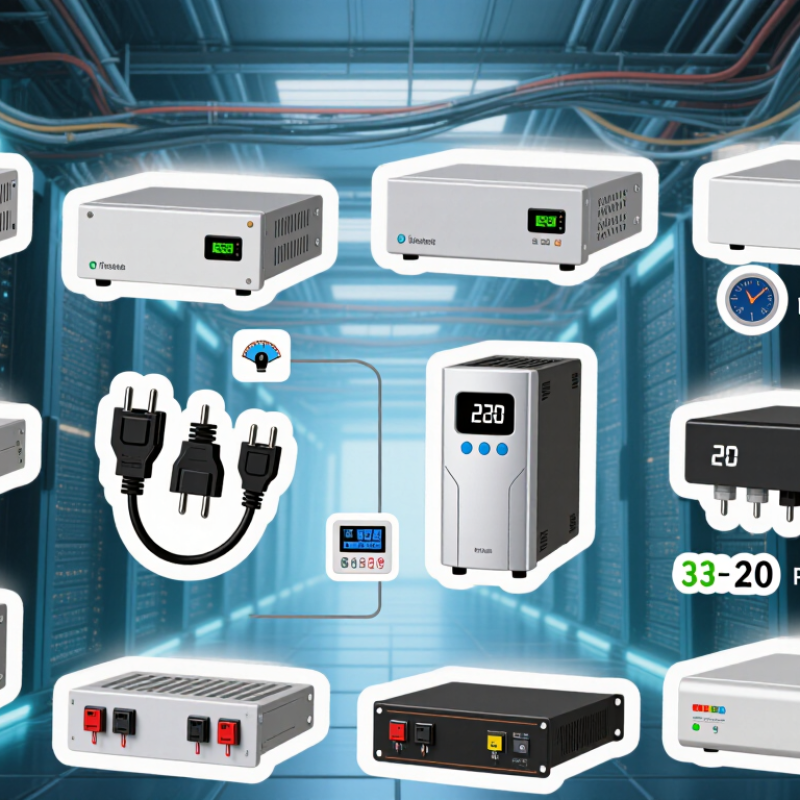
10 Best Power Distribution Units for Global Buyers

What Is a Power Distribution Unit and Why Does It Matter?

What Is a Power Distribution Unit and Why Does It Matter?

A power distribution unit, or PDU, distributes electricity from an upstream source to servers, networking equipment, and other loads. It usually sits inside a cabinet, where every outlet, cable, and breaker has a practical role. Basic models provide outlets. Metered and monitored models show current, voltage, and energy use. Switched models can remotely control individual outlets. That capability sounds minor. During a failed device, it can reduce a costly site visit.

The International Energy Agency’s Electricity 2024 report estimates that data centers used about 240 terawatt-hours globally in 2022. It projects demand may reach 620 to 1,050 terawatt-hours by 2026. A PDU cannot create energy savings alone, but accurate measurements can expose overloaded circuits, idle equipment, and poor phase balance. Uptime Institute’s Global Data Center Survey has also reported that many serious outages create costs above $100,000. Distribution equipment deserves more attention than its quiet appearance suggests.

For global buyers, check voltage, frequency, outlet format, phase type, input plug, and local certification requirements. Confirm the PDU’s temperature rating and installation clearance. In real projects, buyers sometimes focus on outlet count and miss cable reach. That mistake is surprisingly common. A suitable unit should match the rack’s power budget, redundancy design, monitoring system, and future load—not only today’s equipment. Performance data is useful, but field conditions still require careful verification.

Key Features to Compare in Global PDU Selection

Global PDU selection depends on more than outlet count. Buyers should verify input voltage, phase, frequency, and plug compatibility for each destination. A unit rated for one market may be unsuitable elsewhere. Check the datasheet carefully.

Outlet type and spacing matter in real installations. Wide adapters can block nearby sockets, wasting usable capacity. Compare IEC or region-specific connectors, locking options, and cable length. Rated load should include continuous demand, not just the equipment’s startup figure. Leave practical headroom. Heat changes everything.

For data centers, accurate metering can show current per outlet, phase balance, and total energy use. Remote monitoring is useful when alerts report overload, temperature, or lost communication. However, network features add configuration work and cybersecurity responsibilities. Do not treat a dashboard as proof of reliability. Review encryption, access controls, firmware support, and audit records.

Protection features also deserve close attention. Confirm surge protection ratings, circuit breakers, and response behavior under abnormal conditions. Independent safety certifications and local compliance documents reduce purchasing risk. Ask for test reports, installation instructions, warranty terms, and replacement procedures. A low purchase price may hide expensive downtime.

I would also compare service access. Can technicians replace a cord without removing the rack? Are labels readable in dim lighting? Small details matter.

No selection is perfect. Even careful comparisons can miss regional installation practices. A sample test under actual load can expose weaknesses before a large order.

10 Best Power Distribution Units for Global Buyers - Key Features to Compare in Global PDU Selection

Comparison profiles for common data-center, network-room, industrial, and edge-computing PDU applications. Specifications are presented as practical selection criteria rather than brand-specific product data.

Rank PDU Selection Profile Typical Application Input Configuration Rated Voltage Rated Current Outlet Configuration Form Factor Monitoring / Switching Connectivity Protection & Safety Key Buying Advantage
1 Intelligent Three-Phase PDU High-density racks, colocation facilities, and large server rooms 3-phase, 4-wire or 5-wire input; IEC 60309 or hardwired connection 380–415 V AC line-to-line; 220–240 V AC line-to-neutral 16–32 A per phase IEC C13 and C19 outlets, typically 24–42 outlets Vertical 0U or horizontal 2U Per-phase current, voltage, power, energy, and environmental monitoring; outlet or outlet-group switching available Ethernet, IPv4/IPv6, SNMP, HTTPS, and optional serial or sensor ports Overcurrent protection, circuit breakers, temperature monitoring, and grounding verification Balances high power capacity, load visibility, and rack-level remote control
2 Switched Single-Phase PDU Remote server rebooting and individually managed IT equipment Single-phase IEC C20, IEC 60309, or regional plug input 200–240 V AC 16–32 A 8–24 individually switched C13/C19 outlets Vertical 0U, 1U, or 2U rack mount Outlet-level on/off control, sequencing, scheduled power cycling, and circuit-level metering Ethernet with SNMP, web interface, user roles, and optional digital sensors Branch circuit protection, power-on delay, outlet lockout, and alarm thresholds Useful where remote recovery and controlled startup are more important than basic distribution
3 Metered-by-Outlet PDU Rack power auditing, chargeback, capacity planning, and efficiency studies Single-phase or three-phase input depending on rack load 208–240 V AC or 380–415 V AC 16–32 A 12–42 C13/C19 outlets with outlet identification Vertical 0U or horizontal 1U/2U Real-time voltage, current, power, power factor, energy, and outlet-level measurements Network interface with SNMP, HTTPS, data export, and centralized monitoring support Overload alarms, phase-balance alerts, circuit breakers, and event logs Provides the most detailed visibility into the consumption of individual devices
4 Basic Rack PDU Standard server racks, laboratory cabinets, and cost-sensitive installations Regional plug, IEC C14, IEC C20, or IEC 60309 input 100–120 V AC or 200–240 V AC 10–32 A 8–24 fixed outlets, commonly C13, C19, or regional socket types Horizontal 1U/2U or vertical 0U No network monitoring; visual load indicator or local status display may be included Not applicable or local display only Thermal circuit breaker, overload protection, grounding conductor, and metal enclosure Simple, reliable, and economical power distribution with minimal configuration
5 Automatic Transfer PDU Single-corded equipment requiring power-feed redundancy Dual independent AC inputs from separate circuits or UPS sources 200–240 V AC, with model-dependent frequency range 16–32 A 8–24 C13/C19 outlets Vertical 0U or horizontal 1U/2U Source selection, transfer status, input monitoring, and optional remote alerts Ethernet, SNMP, web interface, or dry-contact alarm depending on configuration Source-failure detection, transfer interlock, branch protection, and input-status alarms Improves availability when equipment has only one power supply
6 Outlet-Level Switched PDU Edge sites, unmanned cabinets, telecom rooms, and distributed IT equipment Single-phase input through IEC C20, IEC 60309, or regional connector 100–120 V AC or 200–240 V AC 10–32 A 8–24 remotely switched outlets; C13, C19, or regional sockets Vertical 0U, horizontal 1U, or compact wall-mount enclosure Individual outlet switching, reboot schedules, outlet grouping, and startup sequencing Ethernet, cellular gateway, VPN-compatible interface, or serial management Overcurrent protection, delayed energization, access control, and event logging Supports remote troubleshooting without requiring personnel at the site
7 Environmental-Monitoring PDU Server rooms and racks where temperature, humidity, or leakage is a concern Single-phase or three-phase input 208–240 V AC or 380–415 V AC 16–32 A 12–24 C13/C19 outlets Vertical 0U or horizontal 1U/2U Current and energy monitoring with temperature, humidity, door, smoke, or water-leak sensor support Ethernet, SNMP, HTTPS, email alerts, and building-management integration options High-temperature alarms, humidity thresholds, overload alerts, and sensor fault reporting Combines electrical data with physical-environment awareness for preventive maintenance
8 Industrial PDU Manufacturing lines, control cabinets, test benches, and harsh operating areas Hardwired input, IEC 60309, or industrial regional connector 200–240 V AC, 380–415 V AC, or application-specific voltage 16–63 A Industrial sockets, C13/C19 outlets, terminal blocks, or mixed outlet panels Wall-mounted, cabinet-mounted, or rugged vertical enclosure Local metering; remote monitoring available on selected configurations Ethernet, Modbus TCP/RTU, RS-485, or dry contacts High-impact enclosure, IP-rated options, surge protection, thermal breakers, and strong grounding Designed for demanding environments where durability and serviceability are priorities
9 Compact Edge PDU Small IT closets, branch offices, retail cabinets, and micro data centers Regional plug, IEC C14, or IEC C20 input 100–120 V AC or 200–240 V AC 10–16 A 6–12 C13 or regional outlets Compact 1U, wall-mount, or short vertical chassis Total-load metering; optional remote switching or local digital display Ethernet, Wi-Fi, or no network interface depending on model configuration Overload protection, compact thermal breaker, grounding indicator, and cable retention Fits limited spaces while providing essential rack power management functions
10 High-Density C19 PDU AI servers, GPU systems, high-performance computing, and large power supplies Single-phase or three-phase high-current input 200–240 V AC or 380–415 V AC 32–63 A, subject to local regulations and connector rating 12–24 C19 outlets, with optional C13 mixed outlets Vertical 0U or large horizontal rack format Current, power, energy, and phase monitoring; switched versions available Ethernet, SNMP, HTTPS, sensor ports, and centralized DCIM integration High-capacity breakers, phase-load alarms, temperature monitoring, and reinforced cable retention Supports high-wattage equipment and reduces outlet congestion in dense racks

Selection note: Confirm local plug and socket standards, nominal voltage, frequency, phase arrangement, breaker capacity, short-circuit rating, installation method, certifications, and applicable electrical regulations before purchase.

10 Best Power Distribution Units for International Buyers

For international buyers, the 10 best power distribution units are not simply the models with the highest outlet count. A suitable PDU must match local voltage, frequency, plug standards, phase type, and cabinet dimensions. The IEA’s Electricity 2024 report estimates that data centers used about 460 TWh globally in 2022. Demand could exceed 1,000 TWh by 2026. Energy monitoring is no longer optional for many facilities. Look for accurate metering, remote alerts, overload protection, and clear multilingual documentation. IEC 60320 compatibility also matters when equipment crosses borders.

Tips: Confirm the destination plug before ordering. Check breaker ratings carefully. Ask for test reports and regional certifications. A PDU that works well in one country may create installation delays elsewhere. In practice, buyers should compare input connectors, outlet spacing, cable length, and network protocols. The Uptime Institute’s 2024 Global Data Center Survey continues to identify power availability and resilience as major operational concerns. That supports choosing units with reliable monitoring and controlled outlet management. Yet specifications can be misleading. Claimed accuracy may vary under low loads, and remote features may need separate software licenses. Leave room for human error during installation. A perfect spreadsheet cannot replace a physical fit check.

PDU Types, Standards, and Compatibility by Region

10 Best Power Distribution Units for Global Buyers

PDU Types, Standards, and Compatibility by Region

Choosing among the 10 best power distribution units starts with regional compatibility, not outlet count. Basic PDUs suit stable racks, while metered models show load locally. Switched PDUs add remote outlet control, and monitored units track current, voltage, temperature, and alerts. Intelligent versions help operators balance phases before breakers trip. According to the International Energy Agency’s Electricity 2024 report, data-center electricity demand could exceed 1,000 TWh globally by 2026. Small efficiency errors now scale quickly.

Connector standards create practical differences. North American racks commonly use NEMA plugs and 120/208 V systems. European installations often require CEE 7 or IEC 60320 connections at 230 V. The United Kingdom generally uses BS 1363, while Australia uses AS/NZS 3112. Japan may require different voltage and plug configurations between regions. Check frequency, input plug, socket type, phase count, breaker rating, and local approval markings. IEC 60320 defines many appliance couplers, but it does not replace national safety certification.

Do not trust a universal specification.

Uptime Institute’s 2024 Global Data Center Survey reported that 54% of respondents said their latest outage caused more than 100,000 dollars in direct costs. That figure makes thermal sensors and branch-circuit monitoring more than convenient features. Yet remote switching can create operational risk when labels are unclear or firmware is poorly managed. A careful buyer should test a PDU with the actual rack, cable bend radius, inlet position, and emergency procedures. Compatibility is often missed during procurement.

How to Choose the Right PDU for Your Application and Market

10 Best Power Distribution Units for Global Buyers

How to Choose the Right PDU for Your Application and Market

Choosing a PDU starts with the rack, not the product catalogue. Match input voltage, phase, plug type, circuit capacity, and outlet format to the installation site. A 32-amp unit should not be planned at continuous full load. Verify local electrical rules and manufacturer derating requirements. The International Energy Agency’s Energy and AI report (2025) estimates that data centers used about 415 TWh of electricity in 2024. Efficiency matters.

Measure twice.

For dense servers, select a PDU with accurate current measurement, overload alerts, and clear outlet labeling. Switched outlets can support remote recovery, but they also require strict access control and reliable network design. Environmental sensors help identify heat or humidity near the rack. In practical reviews, cable length is often ignored until airflow becomes restricted. A perfect specification can still fail in a crowded cabinet.

Plan for heat.

Global buyers must also check regional certifications, socket standards, frequency compatibility, warranty coverage, and replacement availability. A unit suitable for one market may need a different input connector or approval in another. Confirm whether monitoring software supports local language, time zones, and secure communication protocols. The 2024 Global Data Center Survey from Uptime Institute reported that 54% of respondents’ most recent outages cost more than $100,000. Redundancy and alarm testing deserve budget space. I would also request a sample unit before large deployment; documentation can be correct, yet installation details may still surprise the team.

Small omissions become expensive.

FAQS

What is a power distribution unit?

A power distribution unit distributes electricity from an upstream source to servers and networking equipment. It usually sits inside a cabinet.

Why does a PDU matter in a data center?

It organizes power delivery and can reveal overloaded circuits, idle equipment, or poor phase balance. Quiet equipment still matters.

What types of PDU features are available?

Basic units provide outlets. Metered units display current and voltage. Monitored units add alerts, while switched units control outlets remotely.

How should international buyers choose the correct PDU?

Match voltage, frequency, phase type, input plug, outlet format, and cabinet dimensions to the installation site. Check local certifications too.

Why are cable length and outlet spacing important?

Short cables may restrict airflow or fail to reach equipment. Tight outlet spacing can block large adapters. Measure the cabinet carefully.

What electrical capacity should a buyer plan for?

Match the PDU with the rack’s power budget and circuit capacity. Do not plan a 32-amp unit at continuous full load.

Can a PDU reduce energy consumption?

A PDU cannot create savings alone. Accurate measurements can expose wasted power and uneven loading, but people must act on the information.

Are remote switched outlets always beneficial?

They can support remote recovery during device failures. However, access controls, network reliability, and careful outlet labeling are still necessary.

What should buyers verify before placing a large order?

Request test reports, regional approvals, software details, warranty terms, and replacement options. A sample unit can expose installation surprises.

What mistakes commonly occur during installation?

Teams often focus on outlet count and overlook cable reach, clearance, heat, or input connectors. The spreadsheet may look perfect. The cabinet may disagree.

Conclusion

A Power Distribution Unit (PDU) is a device designed to distribute electrical power safely and efficiently to multiple connected systems. For global buyers, selecting the right PDU involves more than checking outlet quantity. Important factors include input and output configurations, voltage and current capacity, protection features, monitoring functions, installation method, energy efficiency, build quality, and ease of maintenance. A well-matched PDU can improve reliability, simplify equipment management, and support stable operation in data centers, offices, industrial environments, and other applications.

This guide introduces ten strong PDU options for international buyers while explaining how product types differ, including basic, metered, monitored, and switched models. It also reviews regional standards, plug formats, voltage requirements, certification expectations, and compatibility considerations. By comparing technical specifications, environmental conditions, application demands, and target-market requirements, buyers can select a solution that balances safety, performance, scalability, and cost. The goal is to help organizations make confident purchasing decisions across different regions and operational settings.

Henry

Henry

Henry is a dedicated marketing professional with a profound expertise in the company's offerings. With years of experience in the industry, he possesses an impressive understanding of the market dynamics and consumer behaviors that drive success. Henry is committed to sharing his insights through......