Voita Electronic Voita Electronic

2026 Best Programmable Power Supply for Global Buyers

Time:2026-09-27 Author:Madeline
0%

Choosing the 2026 Best Programmable Power Supply requires more than comparing voltage ranges or online prices. Global buyers need stable output, accurate current control, remote sensing, digital interfaces, and dependable protection. A laboratory bench may demand millivolt precision, while a production line may prioritize fast transient response and automated testing. Small details matter.

Industry data supports this growing demand. MarketsandMarkets estimates that the global power supply market will expand steadily through the decade, driven by industrial automation, electric vehicles, telecommunications, and semiconductor manufacturing. Grand View Research also identifies rising demand for programmable and digitally controlled systems in testing applications. These reports show market momentum, but they do not replace hands-on evaluation. Buyers still need to verify calibration records, cooling noise, software compatibility, and regional service coverage.

Dr. Fred C. Lee, a respected power electronics researcher, stated, “Power electronics is the enabling technology for energy efficiency.” That principle remains highly relevant to every Programmable Power Supply selection. Efficient conversion reduces heat inside crowded test racks. Reliable control protects expensive prototypes. Yet no ranking is perfect. A model praised in one factory may disappoint in another because of unstable mains power, unfamiliar software, or limited technical support. This guide therefore compares measurable performance with practical ownership experience. It considers specifications, usability, safety certifications, warranty strength, and supplier credibility. The best choice is not always the most powerful. It is the supply that performs predictably when the test schedule is tight.
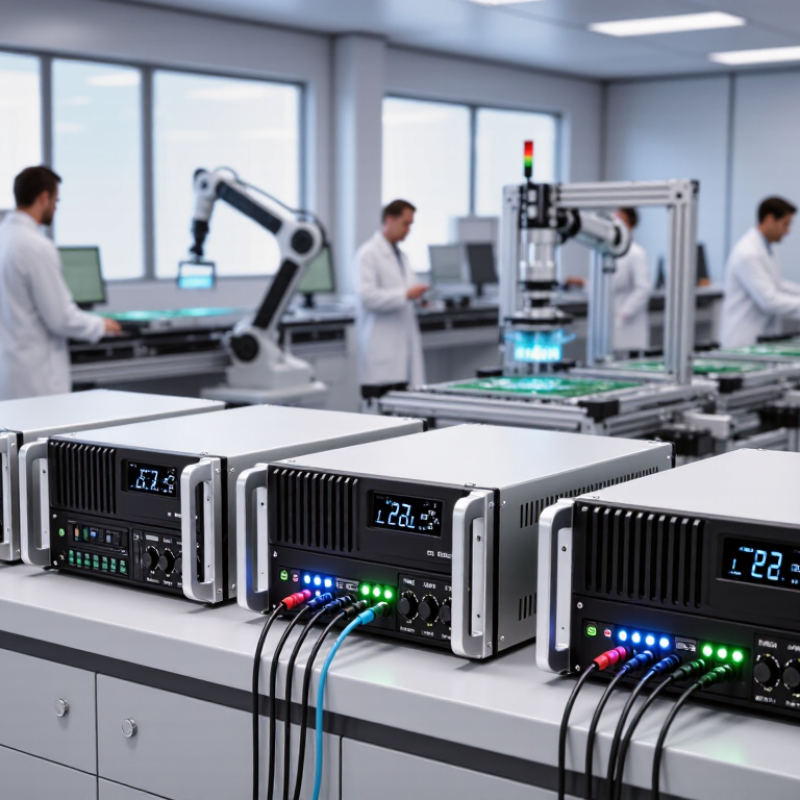
2026 Best Programmable Power Supply for Global Buyers

Definition of a Programmable Power Supply

A programmable power supply is an electronic source whose output can be set and controlled through digital commands. Users can define voltage, current limits, output timing, and ramp rates, then run repeatable test sequences. Many units also provide measured-value readback and protection against overloads. Unlike a basic bench supply, it can reproduce changing electrical conditions without someone turning a knob each time. Not just adjustable. Its key value is repeatability, though setup errors can still produce misleading results.

The IEA’s Global EV Outlook 2024 reports nearly 14 million electric car sales in 2023, about 18% of global car sales. That growth increases testing needs for batteries, chargers, and power electronics. In these settings, programmable supplies can apply controlled voltage profiles and help engineers observe current response. However, a programmable unit is not automatically precise: resolution, regulation, measurement accuracy, and transient response matter. These figures should be checked against the application’s test requirements and the instrument’s specifications.

Tips: Before selecting a supply, match its voltage and current range to the device under test. Check programming interfaces, output response, and readback accuracy. Leave margin for startup surges. A small oversight here can distort a whole test run.

How Programmable Power Supplies Work

2026 Best Programmable Power Supply for Global Buyers
How Programmable Power Supplies Work

A programmable power supply turns digital instructions into controlled electrical output. An operator enters a voltage or current limit through a front panel, computer, or remote interface. Inside, a control circuit compares the requested values with measurements taken at the output. It adjusts the power stage repeatedly to correct any difference. In plain terms, it keeps checking its own work.

When a device draws more current, the supply may shift from constant-voltage mode to constant-current mode. This helps protect a test setup, but it does not replace suitable wiring or external safeguards. For example, a technician testing a small motor might set 12 volts and a 2-amp limit. If startup current rises, the supply lowers voltage to hold the current limit. Watch the display. The change can point to a binding motor or a wiring problem.

Many units also support timed sequences, saved settings, and remote commands. These features make repeated tests easier across different locations, but matching settings alone does not guarantee matching results. Cable resistance, grounding, temperature, and calibration also matter. Use remote-sense leads when long cables cause meaningful voltage drop, and verify readings with a reliable meter. This step is easy to skip. A tidy test plan can still be undermined by one loose terminal. Check output ripple, transient response, and protection behavior against the needs of the actual load.

2026 Best Programmable Power Supply for Global Buyers — How Programmable Power Supplies Work

A programmable supply follows voltage setpoints over time while supplying current to the connected load. This illustrative profile shows voltage steps and the corresponding load current.

Example profile only; values are illustrative settings, not specifications for a particular power supply.

Key Features to Compare for Global Buyers in 2026

For global buyers, compare more than maximum voltage and current. Check input range, frequency, connector options, and whether the unit can operate reliably on local mains. A wide input range can simplify deployment across sites, but it does not replace checking destination-market safety requirements. Small details matter. Confirm that calibration records are traceable and that accuracy is specified across the operating range, not only at one test point.

Dynamic performance deserves equal attention. Read the specifications for ripple and noise, load regulation, and transient recovery; these affect sensitive circuit testing. The International Energy Agency’s Global EV Outlook 2025 reports that electric-car sales exceeded 17 million in 2024, over 20% of global car sales. That points to growing testing needs for power electronics and battery-related systems. Not just watts. A supply’s current limit, output sequencing, and remote sensing can matter when loads change quickly.

Interfaces and serviceability also shape total cost. Compare USB, LAN, and other supported control options against existing test software, and check whether commands and data formats are documented. The Semiconductor Industry Association reported global semiconductor sales of $627.6 billion in 2024, up 19.1% year over year. For production or laboratory use, this makes repeatable measurements and reliable remote control practical priorities. One trade-off is easy to overlook: extra channels may look economical, yet inadequate per-channel power or isolation can limit real test setups. Verify both before comparing prices.

Applications Across Industries and Testing Environments

Programmable power supplies serve very different test environments: an electronics bench, an automated production line, and a battery validation lab. Their value is control over voltage, current, timing, and repeatability. Engineers can reproduce startup ramps, load changes, and fault conditions without manually adjusting controls between runs. That matters.

The International Energy Agency reported nearly 14 million electric car sales worldwide in 2023, about 18% of all car sales. That growth raises testing demands for battery modules, inverters, and vehicle electronics. A supply with programmable voltage profiles, current limits, and logged measurements can help teams examine charging behavior and protection responses. International Federation of Robotics data add another industrial signal: 541,302 industrial robots were installed globally in 2023, according to World Robotics 2024. Automated cells need stable, repeatable power for sensors, controllers, and device testing. Real loads differ.

In practice, match the supply to the test, not just its maximum output. Check voltage and current range, transient response, channel isolation, remote sensing, and communication interfaces. For a long cable run, remote sensing can reduce errors caused by voltage drop. For repeated tests, saved sequences and measurement logs support comparison across shifts. Still, a tidy bench result may not represent heat, wiring losses, or electrical noise on a factory floor. That gap deserves attention. Good test plans document operating conditions and verify measurements with suitable instruments.

2026 Best Programmable Power Supply for Global Buyers - Applications Across Industries and Testing Environments

Selection guide: The ranges below are representative test-system examples, not universal product specifications. Actual voltage, current, power, waveform, and safety requirements depend on the device under test and the applicable test procedure.

Industry or application Typical testing environment Representative output needs Useful programmable supply capabilities Key selection and validation considerations
Automotive electronics ECU benches, sensor validation, component production lines, and vehicle electrical-system simulation Low-voltage DC rails, commonly around 5 V, 12 V, or 24 V; some component tests require wider voltage ranges and transient profiles Adjustable voltage and current limits, programmable ramps, sequence control, transient generation, and remote sensing Confirm that the system can reproduce the required test profile and wiring conditions. Automotive transient tests may require dedicated waveform or transient-generation capability.
Electric vehicles and battery systems Battery-module and pack labs, powertrain development, charger testing, and end-of-line testing High-current, low-voltage testing for modules, or high-voltage DC test systems for packs; voltage and power requirements vary substantially by test object High-power operation, parallel or series system options where supported, programmable limits, logging, and bidirectional source/sink operation when energy recovery is required Check maximum voltage, current, power, isolation, and safe discharge provisions against the battery’s operating limits. A source-only supply cannot absorb energy from a battery or regenerative device.
Consumer electronics Design verification, automated production test, charging-device evaluation, and component characterization Common DC rails include approximately 3.3 V, 5 V, 12 V, and 24 V, with current needs ranging from milliamps to tens of amps depending on the device Fine voltage and current setting, low-noise output where needed, fast set-point changes, channel sequencing, and computer control Compare output accuracy, ripple and noise specifications, transient response, channel count, and measurement resolution with the test plan.
Semiconductor and electronic-component testing Device characterization, wafer or component test stations, reliability labs, and automated test equipment May involve low-voltage, low-current biasing or higher-current supply rails; requirements depend on the device and measurement method Stable output, fine programming resolution, repeatable sequencing, remote sensing, and interfaces for automated test control Evaluate stability, noise, settling time, readback accuracy, and grounding. Very low-current measurements may need specialized source-measure equipment rather than a general-purpose supply.
Industrial automation and control PLC and control-panel testing, motor-drive development, factory acceptance tests, and production lines Common control-system rails include 24 V DC; other equipment may require 48 V DC or higher-voltage DC buses Programmable limits, ramp and sequence functions, protection settings, remote control, and status monitoring Check continuous and peak power, overload behavior, protection response, and compatibility with inductive loads. Use a suitable load or energy-absorbing system when the device under test returns power.
Renewable energy and solar systems Photovoltaic inverter development, DC-link testing, power-conversion research, and laboratory simulation DC test voltages can extend from low-voltage electronics levels to several hundred volts or more; specialized PV test systems may reach 1,000 V or 1,500 V Wide voltage range, programmable power profiles, stable operation, and source/sink capability for relevant conversion tests Confirm maximum DC voltage, insulation and safety provisions, power capacity, and the need for a dedicated solar-array simulator. A standard supply does not automatically reproduce a PV array’s I-V curve.
Aerospace and avionics Avionics bench testing, equipment qualification, subsystem integration, and maintenance test stations DC equipment may use rails such as 28 V DC; some aircraft electrical tests require AC at specified frequencies, including 400 Hz For DC tests: accurate regulation, programmable sequencing, transient profiles, and remote sensing. AC tests require an appropriate programmable AC source. Verify waveform, frequency, transient requirements, isolation, and the exact test procedure. A DC-only programmable supply cannot perform AC power testing.
Medical-device development and production Design verification, power-input testing, manufacturing inspection, and service laboratories Typically determined by the device input rating; low-voltage DC rails are common, while some equipment requires AC input testing Repeatable voltage and current limits, controlled startup and shutdown, data logging, and suitable remote-control interfaces Use the supply as test equipment, not as a substitute for medical-device safety testing. Confirm isolation, grounding, leakage-current test arrangements, and applicable regulatory procedures separately.
Telecommunications and data centers Power-module development, server and network-equipment testing, and rack-level validation Common equipment rails include 12 V and 48 V DC; current and total power depend on the module or system under test High-current output, programmable load-step profiles, low output impedance where required, remote sensing, and automated logging Assess transient response, cabling and connector losses, thermal performance, and whether the test requires a separate electronic load or regenerative load.
Education and general R&D laboratories University labs, prototype development, electronics troubleshooting, and shared engineering workspaces Versatile low-voltage DC coverage is often useful; voltage, current, and channel count should match the lab’s experiments Multiple isolated channels, straightforward front-panel controls, current limiting, preset storage, and USB, LAN, or other supported remote interfaces Prioritize clear specifications, protection features, calibration support, interface compatibility, and safe operating instructions for all intended users.

How to Select a Programmable Power Supply for Your Needs

2026 Best Programmable Power Supply for Global Buyers

Choosing a programmable power supply starts with the load, not the feature list. Write down the required voltage, current, and total power, then leave practical headroom. A 24-volt device drawing 3 amps needs at least 72 watts; startup surges may demand more. That matters. Check whether the supply can handle those surges without entering current limit or shutting down.

Match the instrument’s accuracy and resolution to the job. A display that changes in 10-millivolt steps may be inadequate for sensitive testing, even if its maximum voltage looks impressive. For long leads, remote sensing can compensate for voltage drop at the load. Review ripple, programming speed, output sequencing, and protection settings too. I would not assume that a high specification on one parameter means strong performance across the board.

Consider how operators will use it each day. A clear interface, saved test sequences, and dependable communication connections can reduce setup errors. Check input voltage and frequency compatibility, documentation, and available support for the destination market. For a production bench, test the actual loads and scripts before ordering several units. One awkward detail often appears late: a control interface may not fit an existing workflow. A short trial can reveal that before it becomes an expensive inconvenience.

FAQS

What is a programmable power supply?

It is an electronic source controlled through digital commands. Users set voltage, current limits, timing, and ramp rates. Not just adjustable.

How does it differ from a basic bench supply?

It can repeat changing electrical conditions without someone turning a knob each time. Saved sequences help compare test runs. Setup errors still happen.

Which specifications should I check before buying one?

Match its voltage and current ranges to the device under test. Check accuracy, resolution, regulation, ripple, noise, and transient response. Leave room for startup surges.

Why do readback accuracy and calibration records matter?

Readback shows measured output values, but it may not match the true value closely enough. Check accuracy across the operating range and review calibration records.

What interfaces are useful for automated testing?

USB, LAN, or other supported interfaces can connect the supply to test software. Check command support and data formats before setup. Documentation matters.

When is remote sensing helpful?

It can reduce voltage errors caused by long cables. For example, a supply may compensate for voltage drop between its terminals and a distant load.

Can extra output channels always save money?

Not necessarily. Check each channel’s power capacity and isolation. More channels can look convenient, then fall short in a real test setup.

Where are programmable power supplies commonly used?

They support electronics benches, production lines, battery testing, and power-electronics validation. They can reproduce startup ramps and load changes. Real loads differ.

Do repeatable bench results guarantee reliable factory performance?

No. Heat, wiring losses, and electrical noise may change results on a factory floor. A tidy bench test can still mislead us. Document conditions and verify measurements.

Conclusion

A Programmable Power Supply is an adjustable power source that lets users set output parameters such as voltage and current, often through a digital interface or automated control system. Understanding how it works helps buyers evaluate its control methods, output stability, protection features, measurement accuracy, connectivity, and ease of integration. In 2026, global buyers should also compare operating ranges, energy efficiency, safety functions, documentation, and the availability of technical support suited to their needs.

Programmable power supplies serve a wide range of environments, including electronics development, production testing, education, laboratory research, and equipment maintenance. Choosing the right model starts with defining the application, required power range, number of outputs, control preferences, and expected workload. Buyers should also consider compatibility with existing test systems, future expansion, and the balance between performance, usability, and cost. A careful assessment of these factors can help identify a solution that supports reliable, repeatable testing and day-to-day operation.

Madeline

Madeline

Madeline is a dedicated marketing professional with a wealth of expertise in our company's core offerings. With a keen understanding of the industry, she brings a unique perspective to her role, consistently delivering high-quality content that highlights the superior aspects of our products. As......